
How Is a Handmade Knife Made? From Raw Materials to the Finished Product


In a world dominated by industrial production, watching a handmade knife come to life is a fascinating experience. Behind every blade lies much more than a manufacturing process. It is a combination of experience, tradition, and attention to detail.
Many enthusiasts purchase a Pattadese or another handmade knife because of its beauty and quality. However, few truly know the journey that transforms a simple piece of steel and a natural material into a unique tool.
Choosing the Materials
Every handmade knife begins with the careful selection of materials.
The final quality of the knife largely depends on this first stage. For this reason, artisans devote great attention to selecting:
steel for the blade
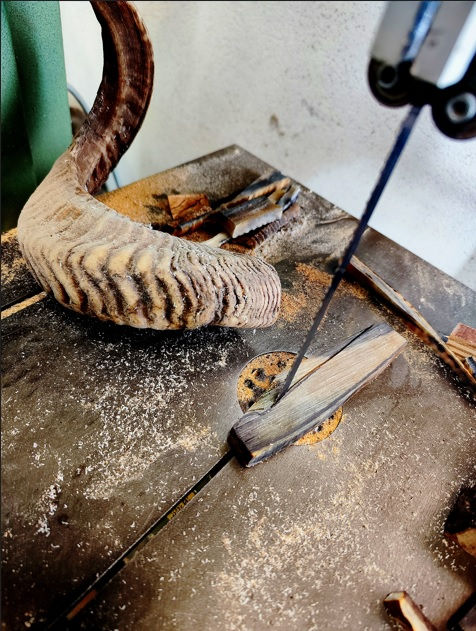
natural horn
fine woods
metal components
Each material has different characteristics that influence appearance, strength, and durability over time.
In traditional Pattadese knives, the handle is one of the most distinctive elements. Grain patterns, colors, and natural shades make every piece different from the next.
Crafting the Blade
Once the steel has been selected, work on the blade begins.
This stage requires precision and experience. The goal is not only to create an attractive shape but also to ensure:
balance
strength
reliability
ease of use
Every curve, thickness, and detail serves a specific purpose.
Even when modern tools are used, human expertise remains essential to ensure that the final result meets the required quality standards.
The Heart of the Knife: The Handle
If the blade represents function, the handle often represents the personality of the knife.
This is where the uniqueness of craftsmanship becomes most apparent.
Every natural material reacts differently during the manufacturing process. No piece of horn or wood is exactly the same as another.
For this reason, every handmade knife possesses characteristics that cannot be perfectly replicated through mass production.
Assembly and Balance
One of the least visible yet most important stages is assembly.
At this point, all the components are brought together, and the artisan checks:
stability
ergonomics
balance
grip comfort
A good knife should not only look beautiful. It should also feel natural in the hand.
Many of the qualities users appreciate during use are the direct result of the care invested in this stage.
Finishing and Details
The difference between an ordinary knife and a handmade knife is often found in the details.
Finishing operations can require significant time because they are intended to perfect:
surfaces
edges
joints
aesthetic details
This is where the knife acquires much of its character.
Every additional inspection contributes to the overall quality of the final product.
Final Inspection
Before a knife is delivered, it undergoes a thorough inspection.
The artisan carefully checks:
blade quality
proper assembly
smooth operation
finishing details
This step is essential to ensure that every piece meets the expected standards.
Why a Handmade Knife Is Different
Many people wonder why a handmade knife has a different value compared to an industrially produced product.
The answer is simple: every stage of the process requires skill, time, and attention.
A mass-produced knife focuses on quantity.
A handmade knife focuses on quality.
This means:
greater uniqueness
more attention to detail
carefully selected materials
personalized craftsmanship
Tradition and Innovation
Modern craftsmanship does not mean rejecting innovation.
On the contrary, many workshops combine traditional techniques with modern tools to achieve even better results.
The goal remains the same: to create a knife that will last over time and represent the tradition from which it comes.
Workshops such as Coltelli Artigianali Manca continue to preserve the culture of Sardinian knife making by creating Pattadese knives and other handcrafted pieces that combine experience, premium materials, and artisanal workmanship.
Conclusion
Behind every handmade knife are hours of work, careful decisions, and skills developed over many years.
From the selection of materials to the final finishing touches, every stage contributes to creating something that goes far beyond simple functionality.
It is precisely this journey that makes a handmade knife special: not just a tool, but the tangible result of a tradition that continues to live through the work of skilled hands.


Comments